Industrial Operations: Why Standard Software Falls Short
Industrial companies operate in environments defined by complex machinery, legacy systems, strict compliance, and highly specific workflows. Off-the-shelf software is typically designed for broad use cases, making it difficult to accommodate the unique requirements of industrial operations. As a result, companies often struggle with:
- Disconnected systems: Machine controllers, ERP, MES, and inventory platforms rarely communicate seamlessly.
- Manual data entry: Operators and supervisors spend significant time transferring information between systems.
- Limited real-time insight: Decision-makers lack a unified view of production, maintenance, and supply chain status.
- Compliance gaps: Regulatory reporting and traceability are often handled outside core systems, increasing risk and overhead.
These challenges create operational friction, slow response times, and can lead to costly errors or downtime.
Why Custom Software Matters in Industrial Environments
Custom software development enables industrial companies to address these pain points directly by building solutions tailored to their processes, equipment, and compliance needs. Key benefits include:
- Deep system integration: Custom solutions can connect legacy PLCs, SCADA, IoT sensors, and business systems, creating a unified data layer.
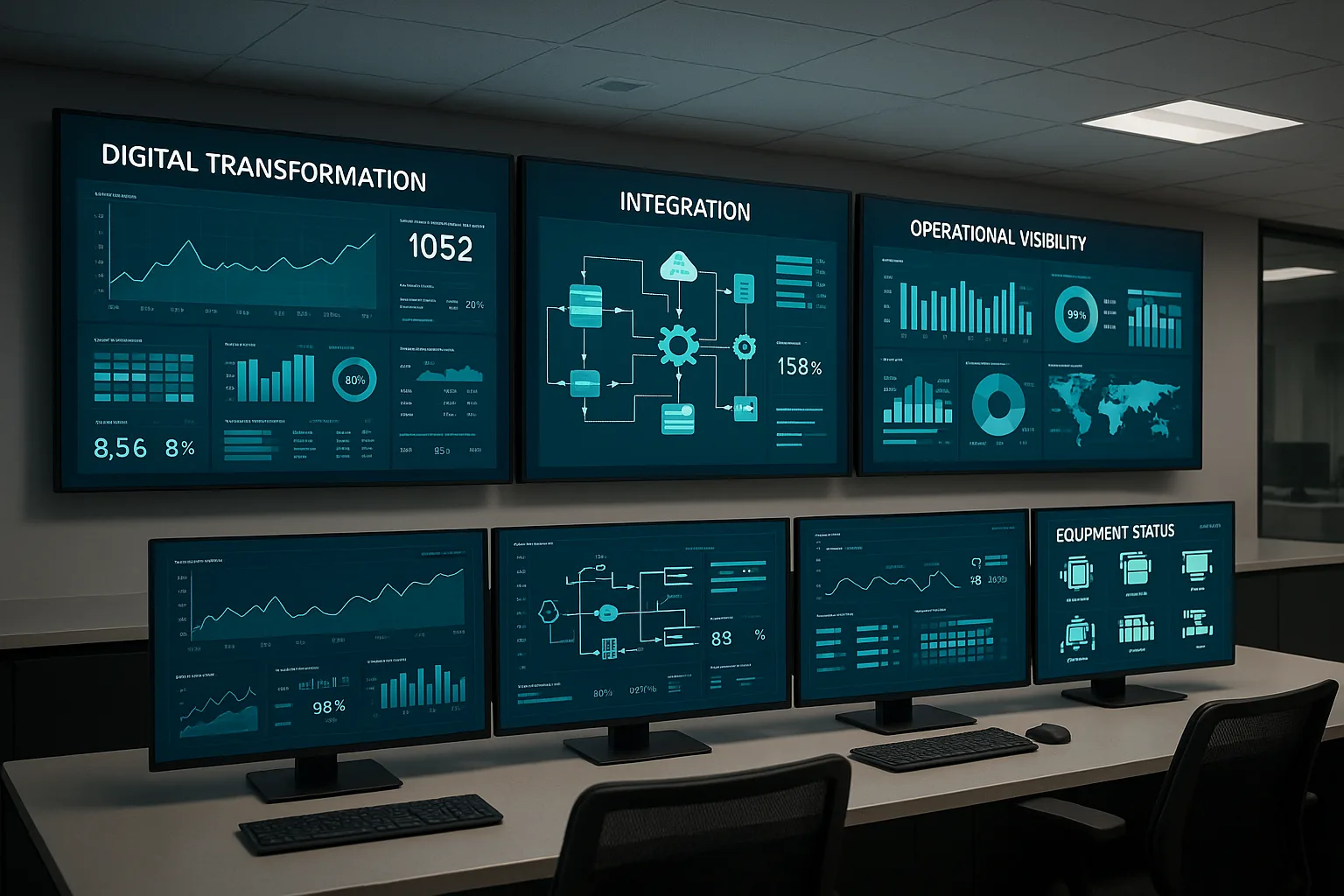
- Operational visibility: Real-time dashboards and analytics tailored to production KPIs, asset health, and quality metrics support faster, data-driven decisions.
- Workflow automation: Automate repetitive tasks such as shift handovers, maintenance scheduling, or quality checks based on actual operational logic.
- Compliance and traceability: Track, log, and report on process steps and materials to meet industry regulations and customer requirements.
- Scalability and adaptability: Solutions can evolve alongside new lines, plants, or regulatory changes.
Approaches to Custom Software: Models, Trade-Offs, and Risks
There are several architectural models for custom software in industrial settings, each with distinct operational implications:
| Approach | Operational Fit | Key Trade-Offs |
|---|---|---|
| Full Custom Platform | Maximum alignment with unique workflows, integration, and reporting needs | Higher initial investment, longer development, full responsibility for support and updates |
| Custom Integration Layer | Connects existing systems (ERP, MES, shop floor) without replacing them | Complex mapping, risk of data silos if not well-architected, ongoing maintenance of connectors |
| Hybrid (Custom + Off-the-Shelf) | Leverages proven platforms for standard needs, customizes only critical workflows | Potential integration friction, dependency on vendor APIs, possible limits to future extensibility |
Risks in industrial custom software projects often stem from:
- Underestimating integration complexity: Legacy equipment may require protocol translation or custom adapters.
- Inadequate requirements gathering: Missing operational details can lead to rework or misalignment.
- Cybersecurity exposure: Bridging OT (operational technology) and IT networks increases attack surface if not properly segmented.
- Change management gaps: Insufficient operator training or buy-in can stall adoption.
Integration Strategy: From Legacy Machines to Unified Data
Successful integration is the foundation of effective custom software in industrial settings. A robust strategy includes:
- Inventory and map all systems: Document every machine, controller, software platform, and data source. Identify communication protocols (e.g., OPC UA, Modbus, proprietary APIs).
- Define integration priorities: Focus first on connections that unlock the most operational value—such as real-time production monitoring or automated downtime alerts.
- Assess data quality and consistency: Plan for data cleansing, normalization, and validation, especially when aggregating from diverse sources.
- Design for scalability and security: Use modular integration components, secure network segmentation, and strong authentication between systems.
- Iterative rollout: Start with pilot lines or plants, refine integration logic, and expand as confidence grows.
Operational Visibility: Turning Data into Actionable Insights
Custom software can transform raw machine and process data into actionable intelligence. Key elements of operational visibility include:
- Role-based dashboards: Tailor interfaces for operators, supervisors, and executives, focusing on relevant KPIs and alerts.
- Automated reporting: Generate compliance, quality, and production reports directly from integrated data.
- Real-time notifications: Proactive alerts for equipment anomalies, process deviations, or supply chain disruptions.
- Historical analysis: Trend analysis for downtime, maintenance, or yield improvement initiatives.
Operational visibility is only as good as the underlying data quality and integration. Investing in robust data pipelines and validation mechanisms is essential.
Evaluation Criteria: Making Informed Decisions
Before committing to a custom software project, industrial leaders should evaluate:
- Business case clarity: Quantify expected ROI from efficiency gains, error reduction, or compliance improvements.
- Technical feasibility: Assess the readiness of existing systems for integration and automation.
- Vendor expertise: Prioritize partners with proven experience in industrial protocols, security, and large-scale deployments.
- Scalability and support: Ensure the solution can grow with your operation and is maintainable over time.
- Change management plan: Prepare for training, support, and incremental rollout to minimize disruption.
Common Mistakes and Warning Signs in Industrial Software Projects
- Overlooking legacy system constraints: Assuming all equipment can be easily connected often leads to costly surprises.
- Insufficient stakeholder engagement: Not involving operators, maintenance, or compliance teams early can result in missed requirements.
- Poor documentation: Lack of clear process mapping and integration specs increases project risk and future maintenance costs.
- Ignoring cybersecurity: Failing to address security in the design phase exposes critical operations to threats.
- Underestimating ongoing support: Custom solutions require a plan for updates, monitoring, and troubleshooting.
Next Steps: Building a Roadmap for Custom Software Success
Industrial companies considering custom software should start with a thorough operational assessment, mapping integration points and defining clear business outcomes. Engage stakeholders across IT, OT, and operations to ensure alignment. A phased approach—beginning with high-impact, well-defined use cases—can deliver early value and reduce risk. Prioritize partners with deep industrial experience and a track record of secure, scalable solutions.
If you need guidance on integration strategy or want to explore how tailored software could improve your industrial operations, consider scheduling a consultative discussion to clarify your goals and technical landscape.