
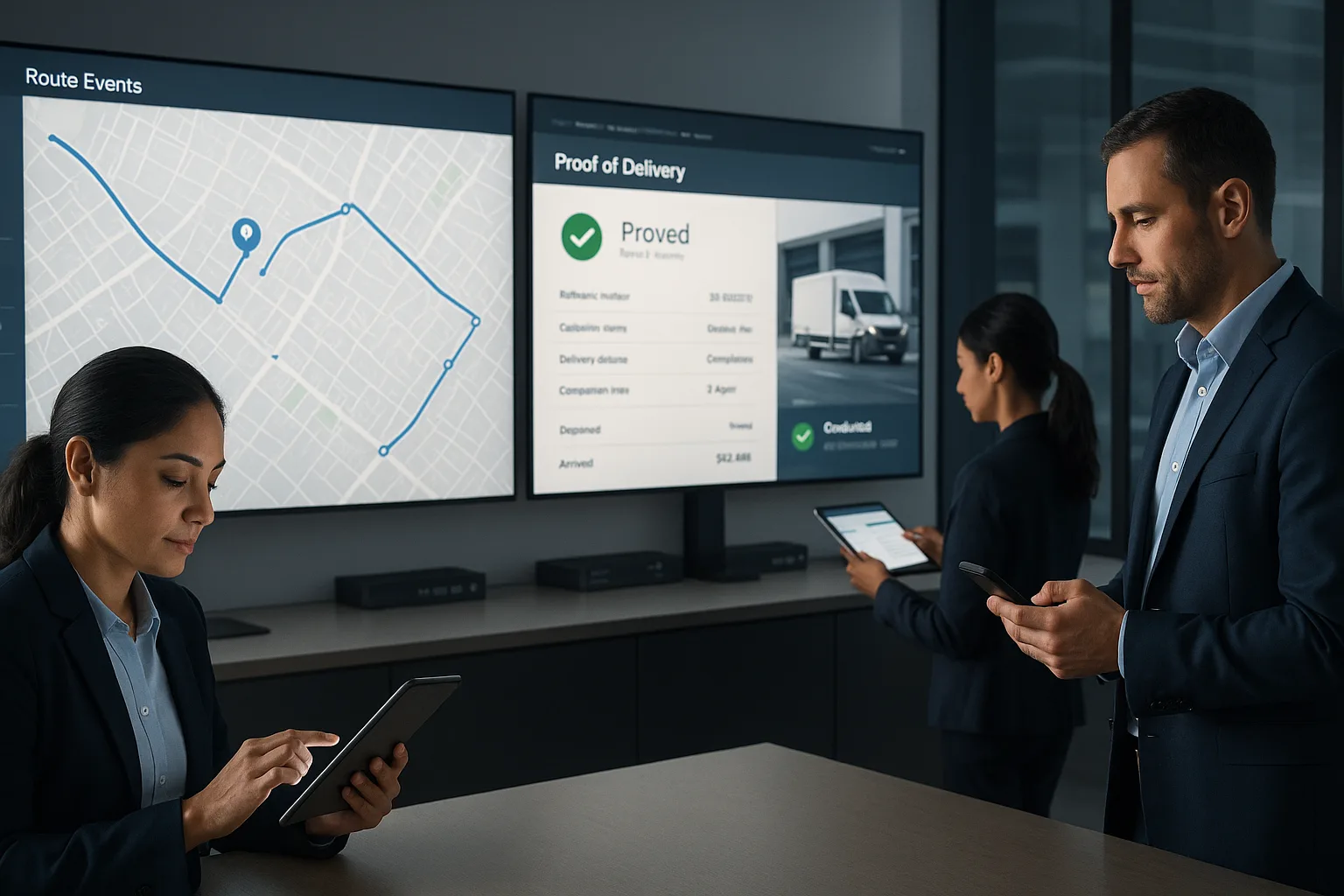
Introduction: Mobile Apps in the Logistics Operational Landscape
Logistics operations hinge on the reliable movement and tracking of goods, people, and information. As supply chains grow more complex and customer expectations rise, mobile applications have moved from a nice-to-have to a critical operational tool. Whether it's capturing proof of delivery (POD), tracking route events, or providing real-time dispatch visibility, mobile apps are now central to modern logistics workflows. But building or selecting the right solution is far from straightforward. This article examines the practical realities of mobile application development for logistics operations, focusing on the needs and risks that matter in the field.
Why Mobile Application Development Matters in Logistics
Mobile apps in logistics do more than digitize paperwork—they directly impact efficiency, accountability, and customer satisfaction. Here’s why this domain deserves careful attention:
- Proof of Delivery (POD): Digital POD (signatures, photos, geotags) reduces disputes, speeds up invoicing, and provides legal evidence.
- Route Event Tracking: Real-time capture of stops, delays, exceptions, or incidents enables proactive management and better ETA accuracy.
- Dispatch and Workflow Visibility: Mobile apps connect drivers, dispatchers, and back-office teams, reducing miscommunication and manual status checks.
- Operational Compliance: Automated checklists and workflows help enforce SOPs, safety protocols, and regulatory requirements.
- Data-Driven Optimization: Mobile data feeds analytics for route planning, asset utilization, and continuous improvement.
In short, well-designed mobile solutions can unlock cost savings, risk reduction, and service improvements—if implemented with operational realities in mind.
Main Approaches, Trade-Offs, and Risks
There are several approaches to mobile application development for logistics, each with distinct trade-offs. Understanding these is essential for making informed decisions.
| Approach | Strengths | Weaknesses | Risks |
|---|---|---|---|
| Off-the-Shelf Logistics Apps | Quick deployment, lower upfront cost, proven features | Limited customization, may not fit unique workflows, vendor lock-in | Hidden integration costs, outgrowing feature set, data silos |
| Custom Mobile App Development | Tailored workflows, deep integration, competitive differentiation | Higher initial investment, longer time-to-market, requires strong product management | Scope creep, technical debt, ongoing maintenance burden |
| Platform-Based (Low-Code/No-Code) | Faster prototyping, adaptable to change, business-user involvement | Performance limitations, integration complexity for advanced needs | Platform dependency, scalability constraints, security concerns |
Beyond the approach, key risks include:
- Offline Reliability: Logistics operations often occur in areas with poor connectivity. Apps must handle offline data capture and reliable sync.
- Integration with Core Systems: Real-time data exchange with TMS, WMS, or ERP is non-trivial and often underestimated.
- User Adoption: Field teams may resist change or struggle with poor UX, undermining ROI.
- Data Security and Privacy: Sensitive route, customer, and cargo data must be protected, especially on lost or stolen devices.
Practical Implementation and Evaluation Criteria
When evaluating or planning mobile app development for logistics, consider these critical dimensions:
- Workflow Alignment: Does the app support your specific delivery, pickup, and exception workflows—including POD, route events, and dispatch visibility?
- Offline Mode & Synchronization: Can users complete tasks and capture evidence without coverage? How robust is the sync process when connectivity returns?
- Integration Capabilities: Is there seamless, secure integration with your TMS, WMS, ERP, or dispatch systems? How are data conflicts handled?
- User Experience (UX): Is the interface intuitive for drivers and field staff under real-world conditions (gloves, sun glare, single-handed use)?
- Proof of Delivery Features: Are digital signatures, photo capture, barcode scanning, and geolocation evidence supported and tamper-resistant?
- Real-Time Visibility: Can dispatchers and customers track status, exceptions, and ETAs in real time? Are notifications and alerts configurable?
- Security & Device Management: Is sensitive data encrypted? Are there controls for remote wipe, device authentication, and user permissions?
- Scalability & Support: Can the solution scale with your operation? What is the vendor’s track record for updates and support?
It’s often useful to pilot with a representative route or region before full rollout, gathering feedback from both field users and back-office stakeholders.
Common Mistakes and Warning Signs in Logistics Mobile Projects
- Ignoring Offline Scenarios: Assuming constant connectivity leads to data loss and frustrated users.
- Underestimating Integration: Treating integration as an afterthought often results in manual workarounds and fragmented data.
- Overcomplicating the UI: Feature overload or poor mobile ergonomics can slow down drivers and increase error rates.
- Neglecting Change Management: Failing to involve drivers and dispatchers in design/testing undermines adoption.
- Weak Security Posture: Inadequate device controls or unencrypted data can lead to regulatory and reputational risk.
- Lack of Iterative Feedback: Not collecting real-world feedback during rollout delays the discovery of critical usability or operational issues.
Conclusion: Next Steps for Logistics Mobile App Initiatives
Mobile application development for logistics operations is a high-impact lever for efficiency, compliance, and customer satisfaction—but only when approached with operational realities in mind. Successful initiatives align technology with real-world workflows, prioritize reliability and integration, and invest in user experience and security. Whether you’re evaluating off-the-shelf, custom, or platform-based options, a structured assessment of workflows, integration points, and field needs is critical.
If you’re considering a mobile solution for logistics, start with a focused discovery phase: map your workflows, identify integration needs, and engage both field and back-office stakeholders early. This groundwork is essential for avoiding costly missteps and achieving lasting operational value.